
Direct collaboration
You work with the person who plans and builds the system.
I have been building for the web since 1997, working on commercial web projects since 2002, and building independently under VoidArt since 2008. Today I help companies define, design and build tailored web applications, workflow systems and websites that stay clear, maintainable and useful in day-to-day work.
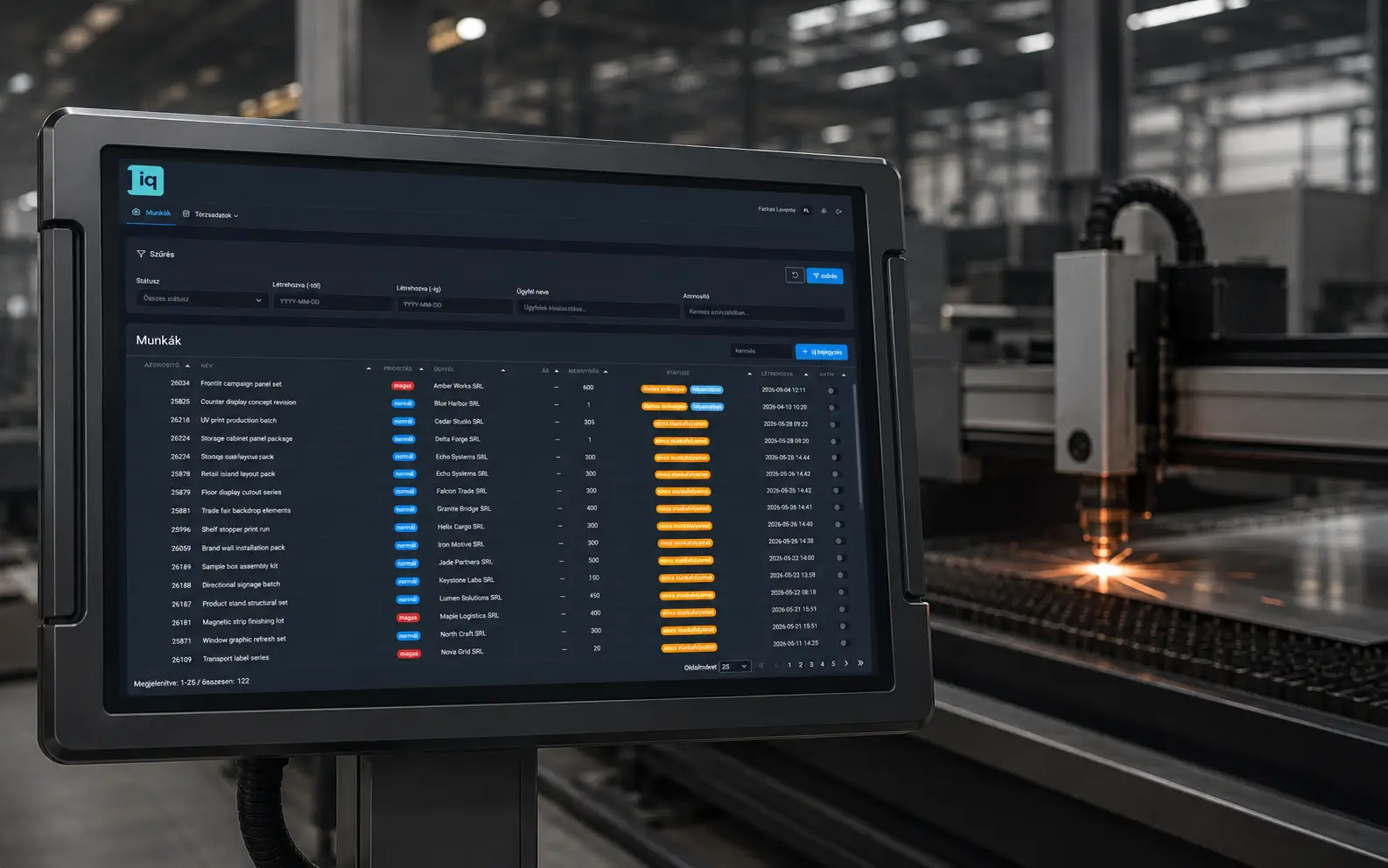
LineIQ is a custom production tracking platform built for manufacturing teams that need better visibility over jobs, priorities, work phases, and shop-floor execution. It replaces fragmented production follow-up with one structured workflow for operational control, traceability, and reporting.
Custom web applications for document-heavy, multi-role, or workflow-critical work that needs structure and reliability.
Web app case studiesProduction tracking, school administration, compliance, scheduling, finance, and other internal tools shaped around real operations.
Business system case studiesBusiness, product, and institutional websites with clear structure, stronger content hierarchy, and maintainable frontend implementation.
Website projectsInterface structure, design systems, and front-end development that keep complex information clear, accessible, and easy to use.
Website and interface work
We clarify the real workflow, users, constraints, and bottlenecks before talking about features.
We decide what the system or website must do first, what can wait, and what creates practical value.
I structure the interface, screens, and interactions so daily use stays clear and efficient.
I implement in focused stages with maintainable code, testing, and visible progress.
I help with rollout, iteration, and the next practical improvements once real use begins.
I started building websites as a hobby in 1997, worked on my first paid web project in 2002, and have run my own company since 2008. That timeline matters because complex digital work benefits from long memory, practical judgment, and calm execution.
You work directly with someone who can move between business logic, information structure, interface design, and implementation without losing the coherence of the project. That is especially useful when the project is not a brochure site, but an operational tool your team will depend on every day.
Long enough to know what ages well, what becomes maintenance debt, and what still matters in daily use.
Real client work across websites, systems, production, administration, and operational contexts.
Direct communication, one clear line of accountability, and decisions that stay coherent from start to finish.
For custom web applications, admin platforms, and business workflows that need clarity and long-term structure.
A strong fit for larger, regulation-heavy, or deeply structured systems where robustness matters.
Used where interaction adds real value, from refined frontends to focused application behavior.
Frontend architecture that keeps content, interfaces, and reusable components under control.
Backend development with practical architecture, clean responsibility boundaries, and maintainable code.
Structured data models, performant queries, and reporting-aware persistence for serious web systems.
API integrations, data flows, recurring tasks, and rule-based operational automation.
Access control, safer workflows, updates, and defensive thinking around real business data.













Yes. Support, refinement, and ongoing improvements are especially important when the system is part of daily operations. I remain available for further adjustments, extensions, and responsible maintenance as the project’s needs evolve.
A business website is built mainly for visibility, trust, communication, and conversion. It helps people understand who you are, what you offer, and how they can contact you or buy from you. A custom web application serves a different purpose: it is designed for active use, where users log in, work with data, complete tasks, and manage repeatable processes.
In simple terms, if the main goal is to present information, build trust, and generate enquiries, you usually need a website. If the main goal is to manage operations, records, documents, bookings, approvals, or internal workflows, you need a web application.
Directly. First, I clarify the real workflow, business goals, constraints, and priorities with the decision-makers. Then I define the structure, design the interface, and build the solution in clear stages, with direct responsibility from start to delivery.
The right starting point is not the label, but the job the system needs to do. If you need a clear public presence, service pages, case studies, lead generation, or a stronger brand presentation, you usually need a website. If people need to log in, manage records, follow processes, book resources, exchange documents, or work inside a system every day, you usually need a web application.
Some businesses need both: a public-facing website for marketing and trust, plus an internal or client-facing application behind it. The right decision comes from the workflow, the users, and the business goal.
It depends on the scope, dependencies, and how clear the starting point is. A well-defined website can move relatively quickly. A custom business system usually requires discovery, prioritisation, and phased delivery so the result remains stable and useful.
There is no honest fixed price without a clear scope. The cost depends on what needs to be designed, written, built, integrated, migrated, tested, and maintained. Page count, content readiness, languages, CMS requirements, custom features, user roles, reports, automation, and third-party integrations all affect the workload.
The practical way to estimate a project is to define the business goal, required functionality, content status, integrations, and timeline first. From there, the work can be scoped realistically instead of reduced to a misleading guess.
Yes, provided the existing codebase and data model can be understood well enough to extend them without unnecessary risk. In that case, I usually begin with a technical review and a realistic plan for the safest next step.
Because they are three different layers. The domain name is the address people type in. Hosting is the server environment that keeps the website or application online. The website build is the actual strategy, design, front-end, back-end, CMS, and functionality.
They are sometimes bundled together, but technically and commercially they are separate services. Keeping them separate makes ownership, renewal, migration, and long-term maintenance much clearer.
No. The domain name is the address that directs people to the right place. Hosting is the infrastructure that stores the files, database, and application environment so the website can load in a browser.
The two services may come from the same provider or from different providers. Both options are normal. The domain points to the service; it is not the service itself.
The client should own both, or at least have full administrative access to them. The business should remain in control of the registrar account, hosting account, renewal notices, and account recovery options. This prevents unnecessary dependency and avoids ownership problems later.
I can manage the technical side when needed, but legal and operational control should remain with the client.
It depends on the scope, content readiness, decision-making speed, languages, and whether the project includes strategy, copywriting, custom functionality, or integrations. A focused business website can progress quickly. A larger, content-heavy, or multilingual website takes longer because structure, content, and review cycles all matter.
In many projects, the main delays are not technical. They come from missing content, slow approvals, shifting priorities, or unclear decisions.
A custom web application usually takes longer than a website because it requires discovery, workflow mapping, user roles, data structures, integrations, and careful testing. The actual duration depends on how many workflows, edge cases, reports, permissions, document types, and external systems need to be handled.
For serious business systems, phased delivery is usually the safer approach. It provides earlier feedback, reduces risk, and makes the next development steps easier to plan.
No, but the better the starting material, the smoother the project will be. At the beginning, what matters most is clarity about the business, audience, offer, and goal. Content can be refined in parallel, but it cannot be treated as an afterthought.
For websites, weak or missing content often slows the project down more than the code. For web applications, the equivalent problem is unclear workflow details, undefined rules, or missing user-role logic.
Yes, if the current system can be understood, stabilised, and extended without introducing unnecessary risk. Sometimes a rebuild is justified, but often the better decision is a targeted improvement: clearer information architecture, a faster front-end, a better admin workflow, stronger content structure, or a focused new module.
The right answer comes after reviewing the codebase, data model, dependencies, and real business pain points. Rebuilding everything is not automatically the smarter option.
It should be, because these are now baseline expectations, not optional extras. Mobile behaviour, speed, crawlable structure, metadata, and internal linking all affect how people use the website and how search engines understand it.
SEO-ready does not mean guaranteed rankings. It means the website is built on a clean technical and content foundation: indexable pages, clear structure, useful copy, sensible metadata, and room for future content growth.
Yes. Launch is usually the beginning of real use, not the end of the work. After release, there may be feedback, refinements, content updates, monitoring, bug fixes, performance improvements, SEO follow-up, or requests for new features.
For business websites, this often means content and technical maintenance. For web applications, it usually means support, ongoing refinement, reporting improvements, role updates, and operational follow-up.
Brochures, business cards, posters, layouts and typographic materials that support the digital work.
View print portfolio
Identity work built to be clear, memorable and usable across real business contexts.
View logo portfolio
Project, product and atmosphere photography that helps the visual presentation stay credible.
View photography portfolio
The best starting point is a direct conversation about what already exists, what is not working, and what a realistic next step looks like.